
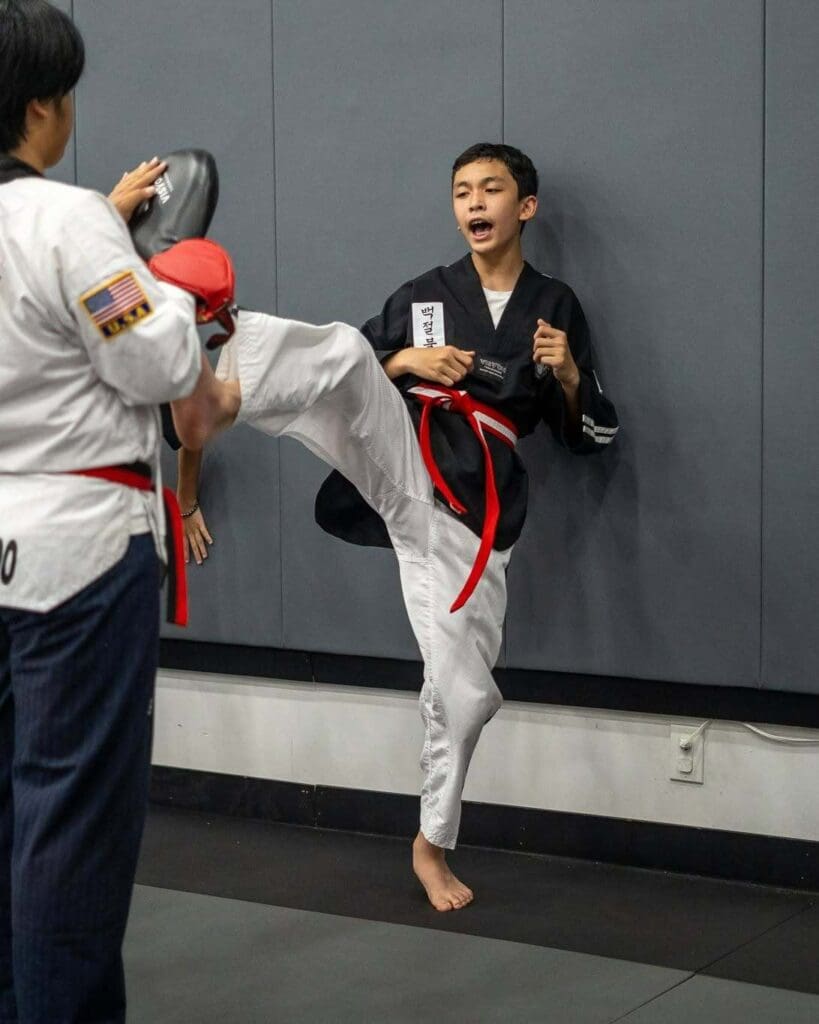
A lot of beginners focus on speed and power right away. But without solid Taekwondo kick chamber basics, even fast kicks lack real impact. Proper body mechanics help us transfer force more efficiently, maintain balance, and control where each kick lands.
The chamber is the foundation of every kick we throw. It sets our balance, controls our direction, and protects our body all at once.
We see it happen all the time. Students rush through the chamber position and wonder why their kicks feel weak or unsteady. The truth is simple. How we bring the knee up, how we hold the ankle, and how the leg aligns before the kick extends all shape our technique.
These details are part of the broader taekwondo fundamentals for beginners, where good habits are built through controlled movement rather than speed alone.
When we focus on proper kick positioning and re-chambering after each strike, our balance improves and our kicks become more precise. These are the small things that separate good kicking mechanics from great ones.
We put this breakdown together so beginners can build their kicks the right way from day one. Whether the goal is cleaner form, better balance, or more confident board breaks, the answers start with the chamber. If you are completely new to martial arts, it also helps to understand why Taekwondo works well for total beginners before getting deeper into technique.
How We Build Strong Kicking Mechanics From the Start
Good Taekwondo kicking mechanics start with simple daily drills. We do not need fancy equipment. We just need focus, repetition, and enough patience to perform each movement correctly.
Proper kick positioning begins at the ground. Our stance, weight distribution, and foot placement all matter.
When these basics are solid, the rest of the kick falls into place more naturally.
The chamber position in Taekwondo involves lifting the knee to waist height or higher depending on the kick and target. At the same time, we keep the foot controlled and close to the body.
This is how the chamber knee ankle relationship works together: the knee drives upward while the lower leg stays prepared for extension.
As we extend the kick, the leg travels toward the target along the correct path for that technique. After the strike, we pull the leg back through the chamber before returning the foot to the floor. That full motion gives us greater control and precision.
Taekwondo kick form is not just about looking good. Proper alignment helps protect our joints, improves efficiency, and allows us to recover faster after each strike.
Core Drills That Reinforce Taekwondo Kick Chamber Basics
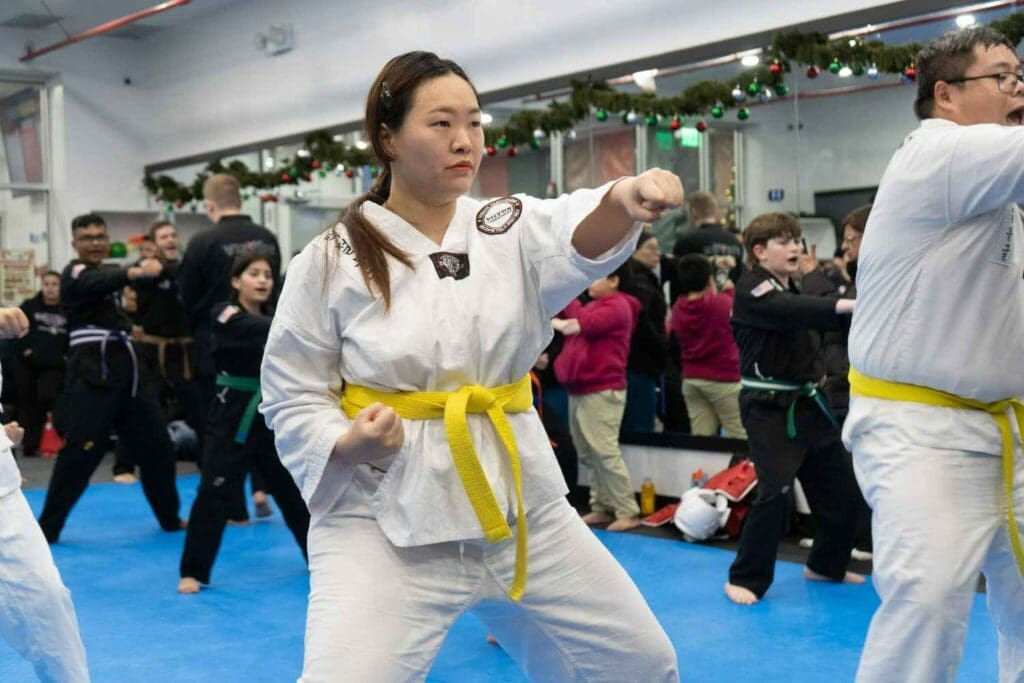
We practice chamber drills to build muscle memory. Muscle memory develops when our body repeats the correct movement consistently enough that the motion eventually feels natural.
Here are four drills we use to build a strong beginner kick chamber:
- Slow-motion chamber holds against a wall.
- Mirror work to check knee height and alignment.
- Partner feedback drills for chamber consistency.
- Resistance band exercises for hip flexor strength.
Wall holds are simple but effective. We stand near a wall for light support, then slowly lift the knee into the chamber position. We hold it for three to five seconds before lowering the leg with control.
Mirror drills help us notice chamber knee alignment in real time. We can see whether our knee is too low, our posture is leaning too far, or our foot is drifting away from the intended position.
Catching these errors early helps prevent poor habits from becoming automatic.
Partner drills provide another useful perspective. A training partner can notice alignment issues that are difficult to see on our own. This kind of structured feedback is also common in well-organized taekwondo classes, where students can practice technique with supervision and make adjustments before increasing speed or power.
Resistance bands can strengthen the hip flexors used to lift and control the knee. Stronger hip flexors make it easier to reach the chamber quickly while maintaining good posture.
Mastering Re-Chambering a Kick for Better Control
Re-chambering protects us after every extension. Many beginners kick and immediately drop the foot toward the floor. That can disrupt balance and make it harder to recover into a ready position.
When we re-chamber, we pull the kicking leg back through the same controlled path it traveled outward. The kicking leg returns before the foot touches the floor. This detail separates a controlled kick from one that simply swings through the target.
A few important points guide our practice:
- Pull the leg back before placing the foot down.
- Keep the return path controlled rather than letting the leg fall.
- Maintain posture throughout the movement.
- Practice slowly before adding speed.
Re-chambering also prepares us for the next movement. Once the leg returns to the chamber, we can place the foot down, kick again, or transition into another technique without losing control.
We always slow things down when learning this motion. Speed comes later. First, we need the correct movement pattern built into our muscle memory.
Then we gradually increase speed while keeping the same mechanics.
Balance Tips Every Beginner Taekwondo Kicks Practitioner Needs
Strong Taekwondo kicking balance comes from a stable base. If our standing leg cannot support the movement, our kicks will always feel shaky. Balance is not an afterthought.
It is a core part of basic Taekwondo kick technique.
Here are four balance tips every beginner should practice:
- Keep the supporting foot stable and connected to the floor.
- Engage the core throughout the kick.
- Use the arms naturally as counterweights.
- Practice single-leg stands to build foundational strength.
The standing foot provides our base of support. Beginners sometimes shift their weight unnecessarily or rise onto the toes before the technique requires it. That can make stability harder to maintain.
Our core muscles also work throughout the entire kicking motion. A stable core helps control the upper body while the kicking leg moves independently. Without that stability, even a powerful kick can drift away from its intended target.
Our arms matter too. They help counterbalance the movement of the kicking leg and keep the upper body controlled. Allowing the arms to move naturally while maintaining a protective position can make the kick feel much more stable.
Single-leg standing exercises are among the simplest balance builders we use. Standing on one leg for 30 to 60 seconds develops ankle, hip, and core stability.
As balance improves, we can add slow chamber lifts while staying on the same supporting leg.
Building Better Kicks With Taekwondo Kick Chamber Basics
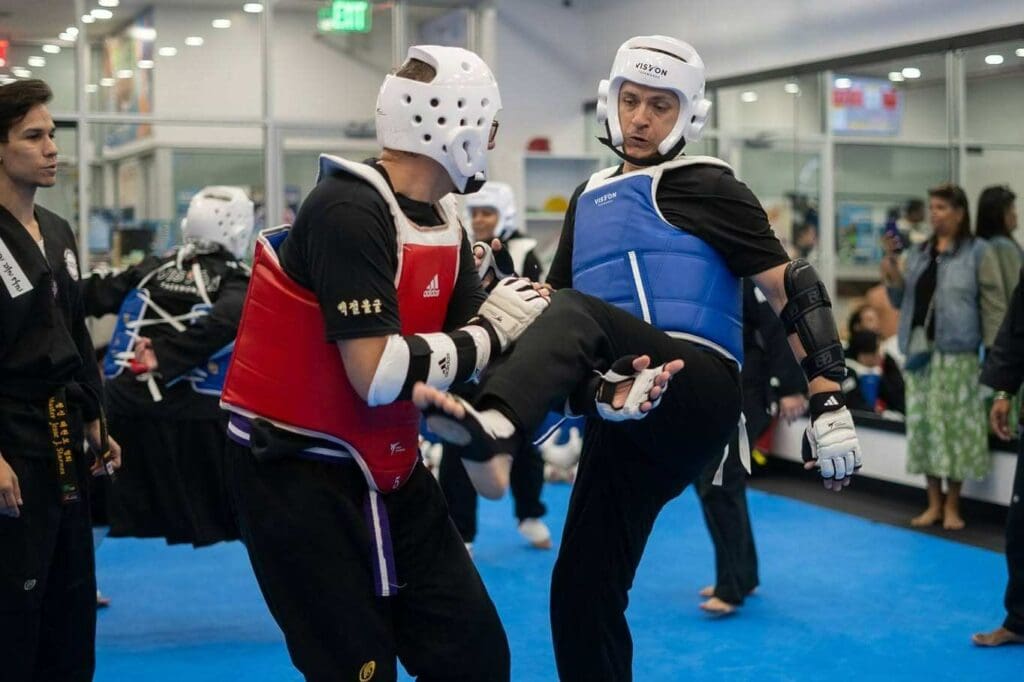
Good kicks start with a strong foundation. When we focus on Taekwondo kick chamber basics, we give beginners the tools they need to kick with balance, control, and power.
A proper chamber position helps protect the body, improves alignment, and prepares every kick for a cleaner extension and recovery.
The best next step is simple. Practice the chamber position slowly before adding speed or power. Stand in front of a mirror and lift the knee into position. Check your posture, knee height, ankle control, and supporting leg.
Then extend the kick slowly and bring the leg back through the same chamber before putting the foot down.
Slow practice may not look exciting, but it builds the movement patterns that stronger kicks depend on. Once the chamber and re-chamber become consistent, speed and power can develop without sacrificing control.